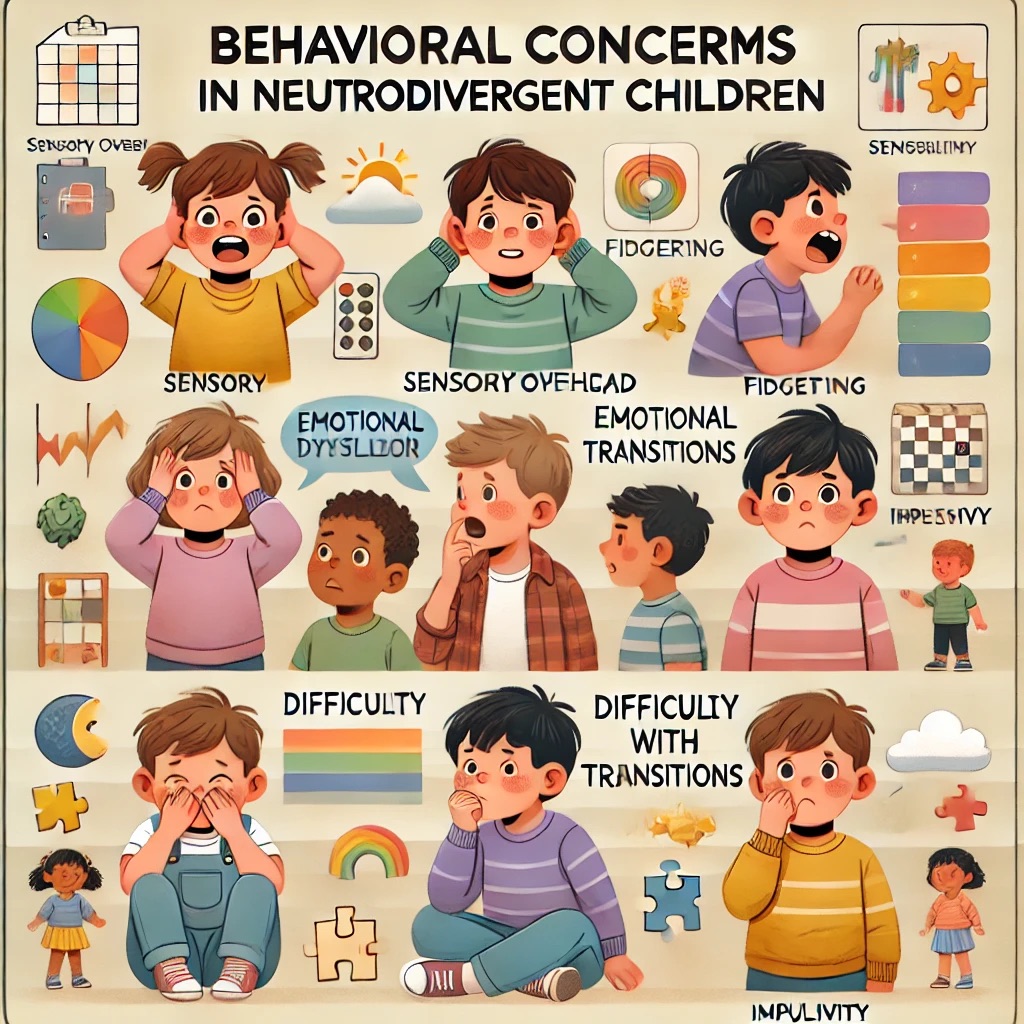
Behavioural concerns in neurodivergent children often emerge as a natural result of the way their brains process information, emotions, and stimuli differently. Neurodivergence—a term that encompasses conditions like autism, ADHD, dyslexia, and more—is not a disorder or a deficit but a variation in human cognition. However, it can present unique challenges, particularly in environments not designed with these differences in mind.
For caregivers, educators, and professionals working with neurodivergent children, understanding these behaviors is crucial for fostering both growth and harmony. Here’s an exploration of the concerns, their potential causes, and strategies to address them with compassion and effectiveness.
Common Behavioral Concerns
1. Emotional Dysregulation
Neurodivergent children may struggle to manage intense emotions, leading to frequent meltdowns, outbursts, or shutdowns. These behaviors are often reactions to overwhelming stimuli or frustration from unmet needs.
2. Difficulty with Transitions
Changes in routine, even minor ones, can be distressing. This difficulty stems from a reliance on predictability and structure to feel safe and grounded.
3. Sensory Sensitivities
Hyper- or hypo-sensitivity to sounds, textures, lights, or smells can result in avoidance behaviors, discomfort, or even sensory overload.
4. Social Challenges
Neurodivergent children may misinterpret social cues, struggle to communicate effectively, or prefer solitude, leading to misunderstandings or social withdrawal.
5. Impulsivity and Hyperactivity
In children with ADHD, impulsivity and high energy levels can manifest as difficulty sitting still, speaking out of turn, or engaging in risky behaviors without considering consequences.
6. Rigid Thinking or Resistance to Change
Cognitive inflexibility can make problem-solving or adapting to new ideas challenging. This rigidity may result in conflict or frustration when expectations are unmet.
Understanding the Underlying Causes
Behavior is a form of communication. For neurodivergent children, certain behaviors often signal unmet needs, discomfort, or an inability to express themselves verbally. Some common underlying causes include:
• Overwhelm or Anxiety: Sensory overload, academic pressures, or social situations can be triggering.
• Unmet Sensory Needs: For example, a child who seeks movement might fidget, while a child avoiding noise might cover their ears.
• Difficulty Understanding Expectations: Ambiguous instructions or inconsistent routines can lead to confusion and frustration.
• Executive Functioning Challenges: Issues with planning, organizing, and self-regulation may make it hard to follow through on tasks.
Strategies to Address Behavioral Concerns
1. Adopt a Strength-Based Approach
Focus on the child’s strengths rather than just their challenges. Celebrate their unique abilities and create opportunities for them to succeed.
2. Understand and Adjust Environments
Make the environment more accommodating by reducing sensory triggers, creating predictable routines, and offering quiet spaces for self-regulation.
3. Teach Emotional Regulation Skills
Use tools like emotion charts, deep-breathing exercises, or mindfulness techniques to help children identify and manage their feelings.
4. Provide Clear and Consistent Expectations
Use visual aids, step-by-step instructions, or social stories to clarify rules and routines.
5. Offer Choices and Autonomy
Giving children some control over decisions can reduce power struggles and encourage cooperation.
6. Use Positive Reinforcement
Celebrate small successes and positive behaviors. Reinforcement builds confidence and strengthens desired behaviors.
7. Practice Patience and Empathy
Respond calmly to challenging behaviors and try to understand what the child might be experiencing. Escalating tension often worsens the situation.
8. Collaborate with Professionals
Occupational therapists, speech-language pathologists, or behavioral therapists can provide targeted interventions to address specific concerns.
The Importance of Advocacy and Support
Caregivers and educators play a crucial role in advocating for neurodivergent children. This includes educating others about neurodiversity, fostering inclusive environments, and pushing for systemic changes that support diverse needs.
Neurodivergent children thrive when they feel understood, valued, and supported. Addressing behavioral concerns with compassion and adaptability creates a foundation for their emotional well-being, academic success, and social connection.
By shifting from a lens of “fixing” to one of “understanding,” we empower neurodivergent children to embrace their full potential and lead fulfilling lives.
Final Thoughts
Every behavior has a story, and every child deserves to be heard. For neurodivergent children, what appears as a challenge is often a call for support, patience, and a willingness to see the world through their eyes. By embracing their unique perspectives, we create a world where they—and we—can truly thrive.

 The Neurodiverse Society