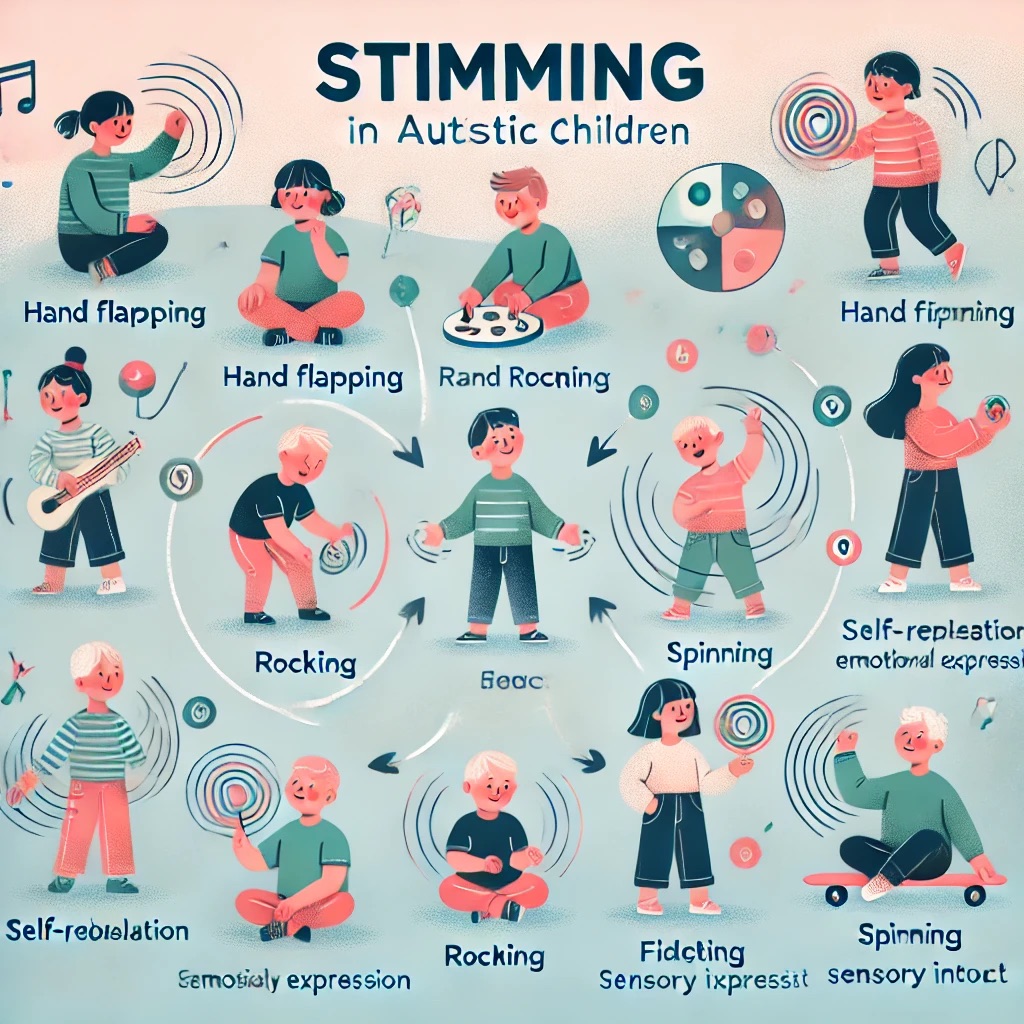
Stimming, short for self-stimulatory behavior, is a term used to describe repetitive movements, sounds, or actions that people use to regulate their sensory experiences and emotions. While everyone engages in some form of stimming—think of tapping your foot, twirling your hair, or humming a tune—it is particularly common and significant in the lives of autistic individuals.
For autistic children, stimming serves as a natural and essential tool to navigate the world around them. In this blog post, we’ll explore what stimming is, its purposes, and why it’s vital to approach this behavior with understanding and support.
What Is Stimming?
Stimming can take many forms, including:
• Physical movements: Hand flapping, rocking, spinning, or finger flicking.
• Vocalizations: Repeating words or phrases, humming, or making sounds.
• Interactions with objects: Spinning toys, lining up items, or flicking light switches.
The key feature of stimming is that it’s repetitive and often rhythmic. While it may appear unusual to others, it’s an entirely natural part of life for many autistic individuals.
Why Do Autistic Children Stim?
Stimming serves several purposes, which can vary depending on the child and the context. Below are some common reasons why autistic children engage in stimming:
1. Regulating Sensory Input
The world can be an overwhelming place, filled with bright lights, loud noises, and unexpected sensations. Stimming helps autistic children manage sensory input, either by calming an overstimulated system or providing extra sensory stimulation when needed.
For example:
• A child might hum or rock to drown out overwhelming background noise.
• Spinning or flicking objects might help focus attention in a chaotic environment.
2. Emotional Regulation
Stimming often serves as a way to cope with strong emotions, whether it’s excitement, anxiety, frustration, or joy. It can act as a self-soothing mechanism during times of stress or as a way to express happiness and enthusiasm.
3. Communicating Needs
Some autistic children, particularly those who are non-speaking or have limited verbal communication, may use stimming to signal their needs or emotions. Observing the type and intensity of stimming can provide valuable insights into what the child is experiencing.
4. Enjoyment and Exploration
Stimming can be fun! Repetitive movements or sounds might bring a sense of comfort, satisfaction, or fascination. For example, some children may enjoy watching light reflections or feeling the texture of certain materials.
Should Stimming Be Stopped?
In most cases, the answer is no. Stimming is a vital and healthy way for autistic children to process their world. Attempting to stop or suppress stimming can increase stress and anxiety, potentially leading to more distressing behaviors.
However, there are situations where stimming may need to be addressed:
• If it poses a safety risk (e.g., head-banging or biting).
• If it interferes with essential activities (e.g., preventing the child from eating or sleeping).
In these cases, it’s important to approach the behavior with compassion. Work with the child to identify underlying triggers and provide alternative, safer ways to meet their needs.
How to Support an Autistic Child Who Stims
1. Observe and Learn
Pay attention to when and why the child is stimming. Is it linked to sensory overload, emotional states, or a need for stimulation? Understanding the triggers can help you provide better support.
2. Create a Sensory-Friendly Environment
Minimize overwhelming sensory input or provide tools like noise-canceling headphones, weighted blankets, or sensory toys that can help the child self-regulate.
3. Celebrate Neurodiversity
Recognize that stimming is a natural part of who the child is. Rather than focusing on “fixing” the behavior, celebrate the unique ways they experience and interact with the world.
4. Seek Professional Guidance
If stimming becomes harmful or significantly interferes with daily life, consider consulting with an occupational therapist or other professionals experienced in autism to develop supportive strategies.
Conclusion
Stimming is not something to fear or suppress; it’s a powerful tool that helps autistic children connect with their world, manage their emotions, and find comfort. By understanding and respecting stimming, we can create a more inclusive and supportive environment where autistic individuals feel safe to be themselves.
Let’s embrace stimming as a reminder that there’s no single “right” way to experience or express life—and that diversity is something to be celebrated.

 The Neurodiverse Society