
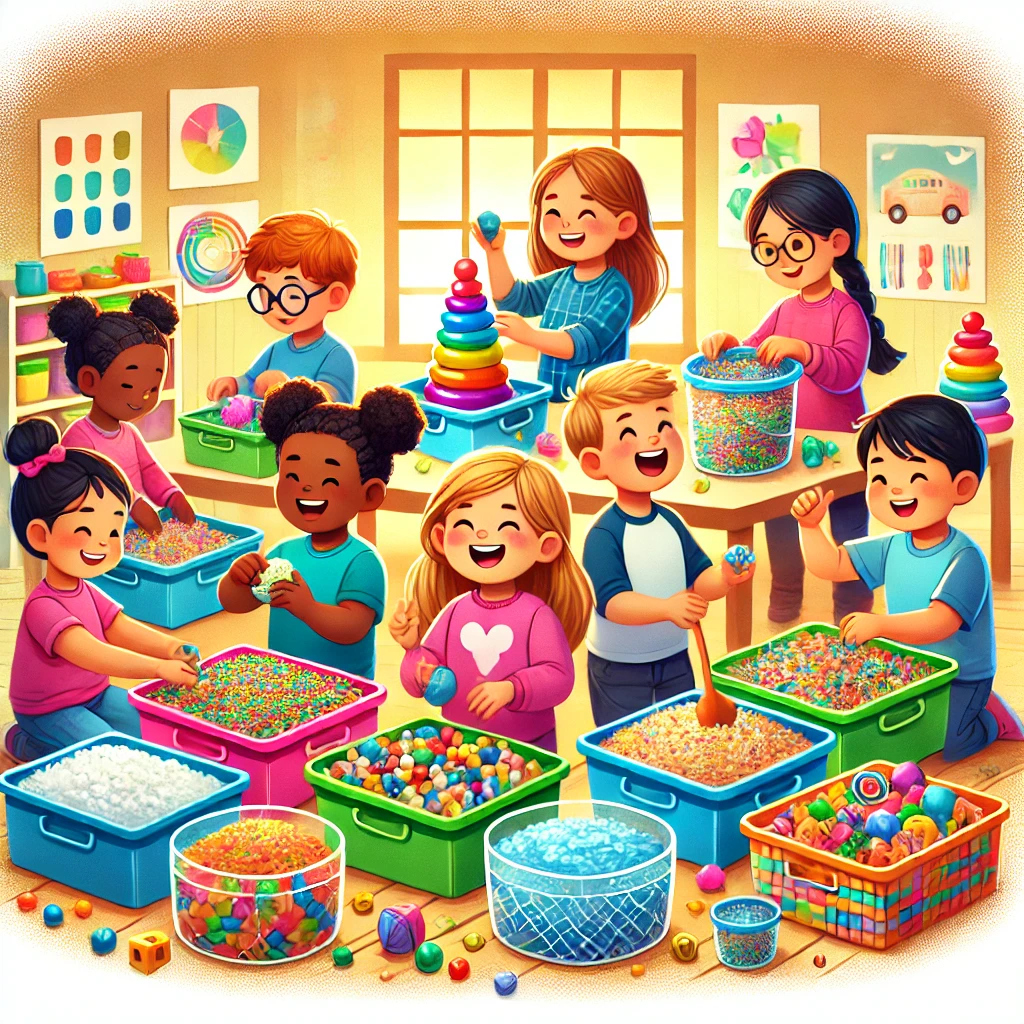
Sensory bins are a fun, versatile, and educational tool that engage children in hands-on exploration through touch, sight, sound, and even smell. They are simple to create and provide countless opportunities for play and learning, especially for young children or those with sensory needs.
Whether you’re a parent, teacher, or caregiver, sensory bins can become a go-to activity that sparks creativity, calms overwhelmed minds, and promotes development. Let’s dive into what sensory bins are, why they’re beneficial, and how you can make your own!
What Are Sensory Bins?
A sensory bin is essentially a container filled with materials and objects designed to stimulate a child’s senses. It could include a variety of textures, colors, shapes, and even scents. These bins encourage children to explore, sort, scoop, pour, and manipulate materials, all while fostering curiosity and creativity.
While they’re often used for sensory play, sensory bins can also target fine motor skills, problem-solving, language development, and even themed learning.
Why Are Sensory Bins Beneficial?
1. Promote Sensory Exploration: Children use their senses to discover and learn about the world. Sensory bins provide a safe, controlled way to explore textures, sounds, and smells.
2. Develop Fine Motor Skills: Scooping, pinching, pouring, and manipulating small items improve hand-eye coordination and dexterity.
3. Encourage Focus and Calm: Playing with sensory bins can be soothing, helping children who feel overstimulated or anxious.
4. Foster Creativity and Imagination: Children can use sensory bins to create their own stories and games.
5. Support Themed Learning: Sensory bins can be customized to align with educational topics, such as animals, seasons, or letters.
How to Make a Sensory Bin
Creating a sensory bin is simple, budget-friendly, and highly customizable. Here’s a step-by-step guide:
1. Choose a Container
Select a shallow plastic bin or storage container with enough space for your child to explore comfortably. Look for one with a lid if you plan to store it for future use.
2. Select a Base Material
The base material sets the foundation for the sensory bin. Popular options include:
• Dry Materials: Rice, beans, pasta, sand, oats, birdseed, or shredded paper.
• Wet Materials: Water, water beads, or slime (ensure these materials are safe and supervised).
• Natural Materials: Dirt, small pebbles, leaves, or dried flowers.
Ensure the base is age-appropriate to avoid choking hazards.
3. Add Theme-Related Items
Decide on a theme to make the bin more engaging. For example:
• Beach Theme: Add shells, small toy fish, and a small shovel.
• Alphabet Theme: Use foam letters, letter beads, or flashcards.
• Farm Theme: Include toy animals, corn kernels, and miniature fences.
4. Include Tools and Accessories
Add items that encourage exploration, such as:
• Scoops, spoons, or measuring cups.
• Tongs, tweezers, or small grabbers.
• Small bowls or containers for sorting and pouring.
5. Enhance with Sensory Extras
If you want to engage multiple senses, consider adding:
• Colors: Dye rice or pasta with food coloring.
• Smells: Add cinnamon sticks, essential oils, or dried lavender.
• Sounds: Use items that rattle, crinkle, or make noise when handled.
6. Set Up a Play Space
Place the sensory bin on a washable surface or a plastic mat to contain any mess. Have your child sit comfortably, and let the exploration begin!
Tips for Sensory Bin Success
1. Supervise Young Children: Always supervise children to ensure they play safely, especially if small objects or edible materials are involved.
2. Encourage Open-Ended Play: Let the child lead. Avoid strict instructions and allow them to explore and interact in their own way.
3. Rotate Themes: Keep things fresh by changing the sensory bin’s theme or materials every few weeks.
4. Clean and Store Properly: Dry materials like rice and beans can be stored in airtight containers for future use. Wet materials, like water beads, may need to be discarded after a session.
Easy Sensory Bin Ideas
• Rainbow Rice Bin: Dye rice in different colors and add small toys for sorting.
• Arctic Adventure Bin: Use cotton balls, fake snow, and plastic penguins or polar bears.
• Treasure Hunt Bin: Fill with sand and hide small gems, coins, or figurines. Provide tools to “dig” for treasure.
• Seasonal Bins: Incorporate holiday or seasonal elements, like plastic eggs for Easter, fall leaves, or ornaments for winter.
Final Thoughts
Sensory bins are more than just a fun activity—they’re a tool for exploration, learning, and development. Best of all, they’re easy to create and adapt to your child’s age, interests, or needs. By providing your child with sensory experiences through these bins, you’re nurturing their curiosity and giving them a playful way to engage with the world around them.
Ready to get started? Grab a bin, pick a theme, and watch the magic of sensory play unfold!

 The Neurodiverse Society