One of the most common frustrations parents share is this:
“I’ve tried everything, but the behaviour isn’t improving.”
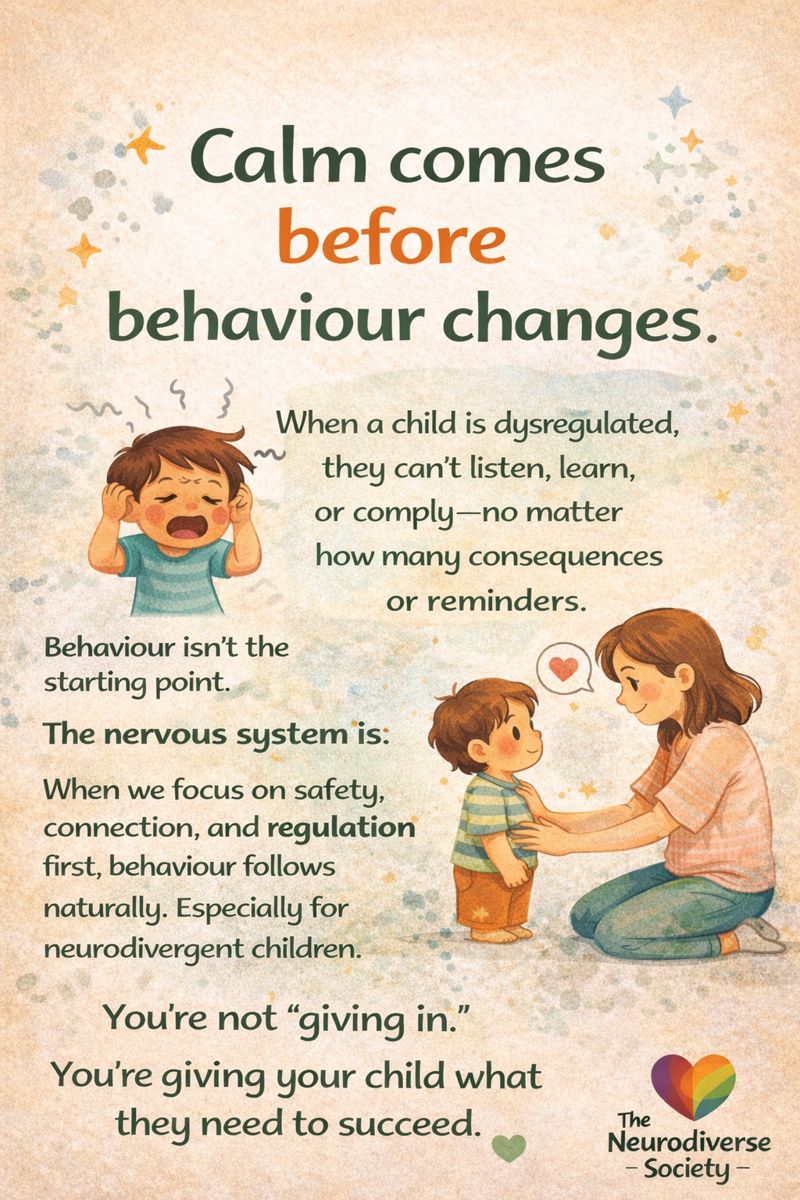
The truth is, behaviour doesn’t change first—calm does.
For neurodivergent children especially, behaviour is not a choice made in isolation. It is the outcome of what’s happening inside the nervous system. Until a child feels regulated, safe, and supported, expecting behaviour change is unrealistic.
Let’s break down why calm must come first—and what that means in real life.
Behaviour Is Not the Starting Point
When a child is dysregulated, their brain is not in a place where learning, listening, or problem-solving can happen.
In those moments, the nervous system is focused on survival, not cooperation.
This can look like:
- Meltdowns
- Refusal or shutdown
- Yelling or hitting
- Running away
- Crying or collapsing
These behaviours aren’t “bad choices.” They are signals that the child is overwhelmed.
Trying to correct behaviour without addressing regulation is like asking someone to think clearly while they’re panicking—it simply doesn’t work.
Why This Is Especially Important for Neurodivergent Children
Neurodivergent children often experience the world as more intense.
Sounds are louder.
Transitions are harder.
Unexpected changes feel unsafe.
Verbal instructions can be overwhelming.
What might seem like a small moment to an adult can be enough to overload a child’s nervous system.
When this happens, the brain shifts into fight, flight, or freeze. In that state:
- Logic shuts down
- Language access decreases
- Emotional control disappears
No amount of consequences, reminders, or “calm down” requests can override a dysregulated nervous system.
Consequences Don’t Create Calm
Traditional parenting advice often focuses on consequences as the solution to behaviour.
But consequences assume a child:
- Has access to self-control
- Understands expectations in that moment
- Is choosing their behaviour
When a child is dysregulated, none of those things are true.
Consequences may stop a behaviour temporarily, but they don’t teach:
- Emotional regulation
- Coping skills
- Communication
- Self-awareness
In many cases, they actually increase fear, shame, and anxiety—making future behaviour challenges more likely.
Calm Is Built Through Safety and Support
Calm doesn’t come from control.
Calm comes from safety.
When children feel safe, their nervous system can settle. When their nervous system settles, behaviour naturally improves.
Supportive strategies that help create calm include:
- Predictable routines
- Visual supports instead of verbal overload
- Co-regulation with a trusted adult
- Sensory accommodations
- Flexible expectations
These strategies aren’t “giving in.”
They are meeting the nervous system’s needs.
Regulation Comes Before Learning and Behaviour
A regulated child can:
- Listen
- Learn
- Follow directions
- Try again after mistakes
A dysregulated child cannot—no matter how capable they are in other moments.
That’s why focusing on calm first isn’t permissive parenting.
It’s effective parenting.
Visual Supports Help Calm the Nervous System
One of the most effective ways to support regulation is through visual aids.
Visual supports:
- Reduce verbal demands
- Make expectations clear
- Increase predictability
- Support independence
- Lower anxiety
For neurodivergent children, visuals often communicate more clearly than words—especially during stressful moments.
This is why tools like visual schedules, lanyards, and routine boards can dramatically reduce chaos in the home.
Calm Before Behaviour Changes in Real Life
This might look like:
- Helping a child regulate before asking them to clean up
- Offering sensory input before a transition
- Using visuals instead of repeating instructions
- Connecting emotionally before correcting behaviour
When calm comes first, behaviour changes are more sustainable—and more compassionate.
You’re Not Doing It Wrong
If behaviour strategies haven’t worked for your family, it doesn’t mean you’re failing.
It means:
- Your child’s nervous system needs support
- The advice you were given didn’t fit your child
- A different approach is needed
And that’s okay.
Moving From Chaos to Calm
Inside our Chaos to Calm Workshop, we focus on exactly this:
- Understanding behaviour through regulation
- Supporting nervous systems first
- Using visuals and routines that actually work
- Reducing overwhelm for both children and parents
💚 Chaos to Calm starts February 9
Built for real neurodivergent families and real life.
Final Thought
Behaviour is communication.
Calm is the foundation.
When we lead with regulation, everything else becomes possible 💚

 The Neurodiverse Society