At The Neurodiverse Society, we believe respite care can be more than just a break—it can be a meaningful, enriching experience for children.
That’s why we’re proud to offer farm-based respite services that combine support, learning, and connection in a calm, natural environment.
What Makes Our Respite Different?
Our program is designed to feel safe, supportive, and engaging for every child. Set in a peaceful farm setting, children have the opportunity to explore, learn, and grow at their own pace.
We offer:
1:1 or small group support to ensure individualized attention
Qualified and experienced caregivers who understand neurodivergent needs
A focus on hands-on, real-life learning experiences
A calm, structured environment that reduces overwhelm
From interacting with animals to exploring outdoor spaces, each experience is tailored to support comfort, confidence, and skill-building.
Safety You Can Trust
We know that trust and safety are everything when it comes to your child’s care.
Our space is:
Fully insured
Located on a secure, private property
Equipped with cameras for added peace of mind
Every detail has been thoughtfully considered so families can feel confident and at ease.
Who Is This For?
Our respite services are ideal for:
Neurodivergent children who benefit from smaller, quieter environments
Families looking for trusted, high-quality care
Children who thrive with hands-on, experiential learning
Whether your child needs a few hours of support or a consistent routine, we are here to help.
Let’s Connect
If you’re interested in learning more about our farm-based respite services, we would love to hear from you.
We’re so excited to share that we’ve just uploaded more FREE resources to our website!
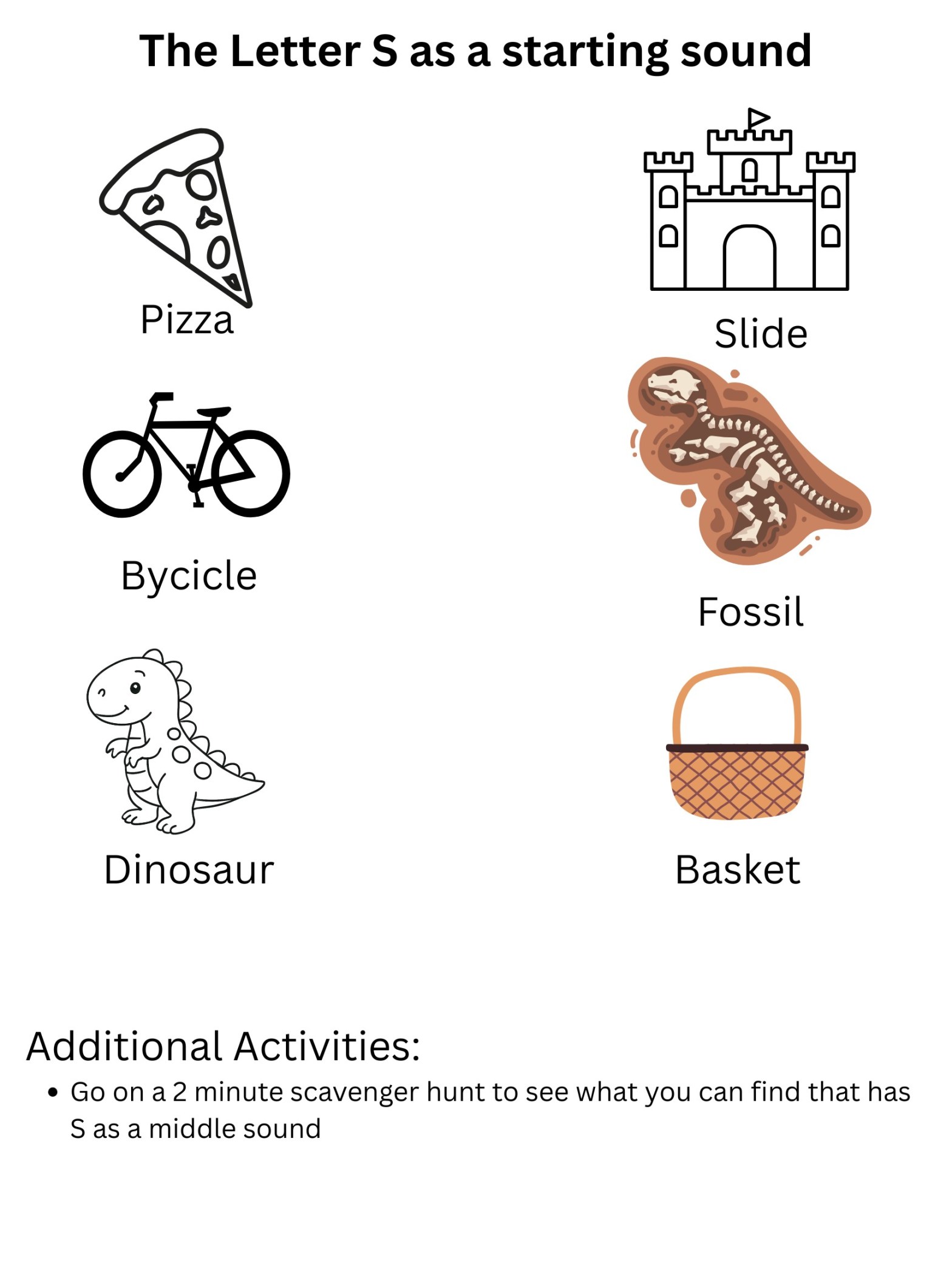
At The Neurodiverse Society, we know how important it is to have access to simple, effective tools that support learning at home, in the classroom, or during therapy sessions. That’s why we’re continuing to grow our collection of print-and-go resources—completely free for you to use.
These new worksheets are designed to help children practice important early skills like:
Letter recognition
Beginning and ending sounds
Visual matching
Early phonics development
And the best part? They’re ready instantly. Just download, print, and start practicing.
We’ve created these with neurodivergent learners in mind, keeping layouts clean, simple, and easy to follow—so children can focus, build confidence, and experience success.
Whether you’re a parent, educator, or therapist, these resources are perfect for:
Daily practice at home
Quiet learning time
Classroom centers
Speech and language support
We truly believe that learning tools should be accessible, practical, and supportive for every child—and we’re so happy to be able to offer these to you at no cost.
👉 Head over to our website now to download your free worksheets and start practicing today!
More resources are coming soon, so be sure to check back often 💛
If you’ve ever followed parenting advice exactly as told—and still felt like things were falling apart—you’re not alone.
Many parents of neurodivergent children try everything they’re “supposed” to do:
Be consistent
Follow through with consequences
Ignore certain behaviours
Use reward charts or punishments
And when it doesn’t work, the message they receive—directly or indirectly—is that they must be doing something wrong.
But here’s the truth:
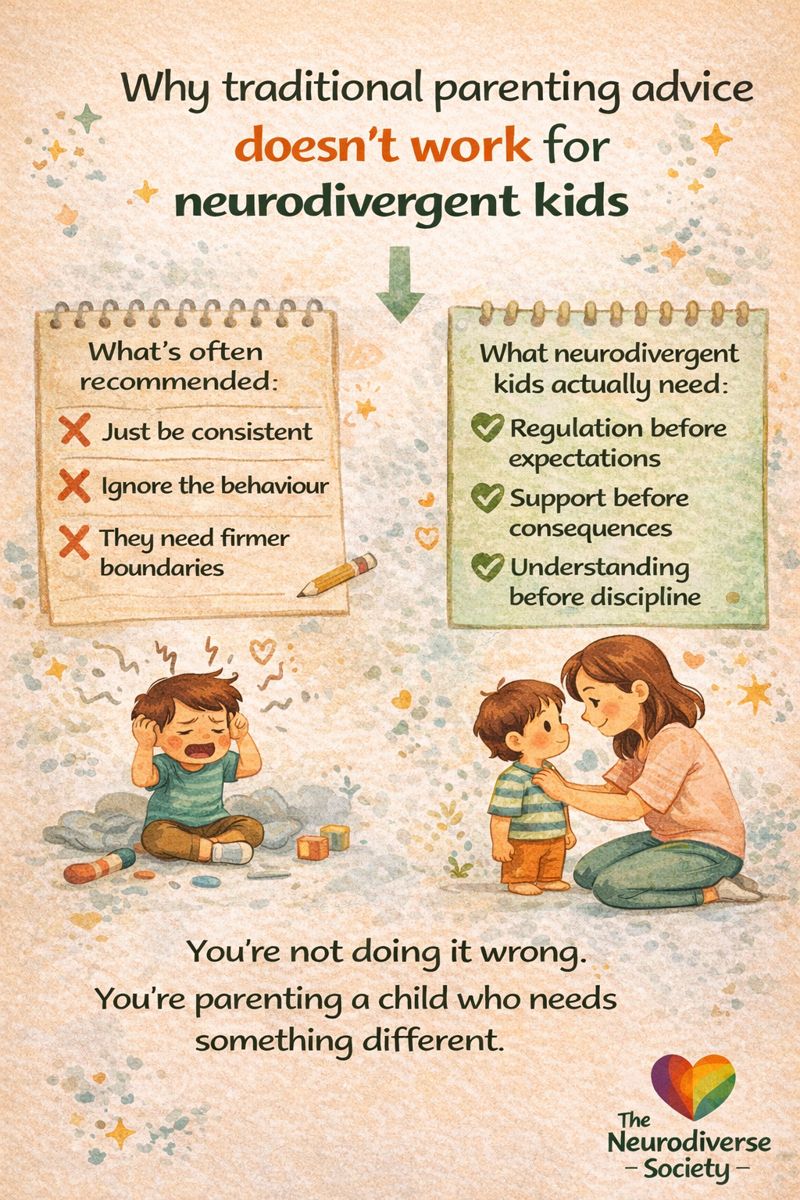
Traditional parenting advice often doesn’t work for neurodivergent kids because it wasn’t designed for their brains.
Most Parenting Advice Is Built on Compliance, Not Regulation
Traditional parenting models are often built around one core assumption: That children can meet expectations if they choose to.
This works (to some degree) for neurotypical children whose nervous systems can tolerate:
Verbal instructions
Delayed rewards
Emotional discomfort
Flexible transitions
But neurodivergent children aren’t refusing to comply—they’re often unable to access regulation in that moment.
Behaviour isn’t a choice when the nervous system is overwhelmed.
Neurodivergent Kids Experience the World Differently
Neurodivergent children (including autistic children, children with ADHD, sensory processing differences, speech delays, and more) process the world in a fundamentally different way.
Things that seem small to adults can feel overwhelming:
Noise
Transitions
Unexpected changes
Too many verbal instructions
Sensory discomfort
When the nervous system is overloaded, the brain shifts into survival mode. In that state:
Reasoning shuts down
Emotional control disappears
Learning stops
No amount of consequences can override a dysregulated nervous system.
Why “Just Be Consistent” Often Backfires
Consistency is one of the most common pieces of parenting advice—and one of the most misunderstood.
For neurodivergent children, rigid consistency can actually increase distress.
Why?
Energy levels fluctuate daily
Sensory tolerance changes moment to moment
Development is not linear
Expecting the same response, behaviour, or capacity every day ignores what’s happening inside the child’s body and brain.
What neurodivergent kids need isn’t rigidity—it’s predictability with flexibility.
Punishment Doesn’t Teach Regulation
Punishment assumes a child has access to self-control and is choosing not to use it.
But when a child is dysregulated:
They can’t “learn a lesson”
They can’t reflect on behaviour
They can’t access coping skills
Punishment may stop a behaviour temporarily, but it doesn’t teach:
Emotional regulation
Communication
Problem-solving
In fact, it often increases fear, shame, and anxiety—making future meltdowns more likely.
What Neurodivergent Kids Actually Need
Instead of compliance-based strategies, neurodivergent children benefit from approaches that prioritize the nervous system first.
This includes:
Regulation before expectations
Support before consequences
Understanding before discipline
When children feel safe, understood, and supported, behaviour improves naturally—because their nervous system is no longer in survival mode.
The Role of Visual Supports and Structure
One reason traditional advice fails is because it relies heavily on verbal instruction.
For many neurodivergent children, words alone are not enough—especially during stress.
Visual supports help by:
Reducing verbal overload
Making expectations clear
Supporting transitions
Increasing independence
Visual schedules, lanyards, and routine boards don’t “spoil” children—they support their brains.
You’re Not Doing It Wrong
If traditional parenting advice hasn’t worked for your family, it doesn’t mean you’ve failed.
It means:
Your child needs something different
Your family needs tools designed for neurodivergent needs
The advice didn’t fit your reality
Parenting a neurodivergent child requires different strategies, not more effort.
Moving From Chaos to Calm
When parents shift from control-based strategies to regulation-based support, something powerful happens:
Meltdowns soften
Transitions improve
Communication increases
Parents feel more confident and less overwhelmed
This is exactly what we focus on inside our Chaos to Calm Workshop—a practical, supportive program designed for real neurodivergent families and real life.
💚 Chaos to Calm starts February 9 Step-by-step support, visuals, routines, and strategies that actually work.
One of the most common frustrations parents share is this:
“I’ve tried everything, but the behaviour isn’t improving.”
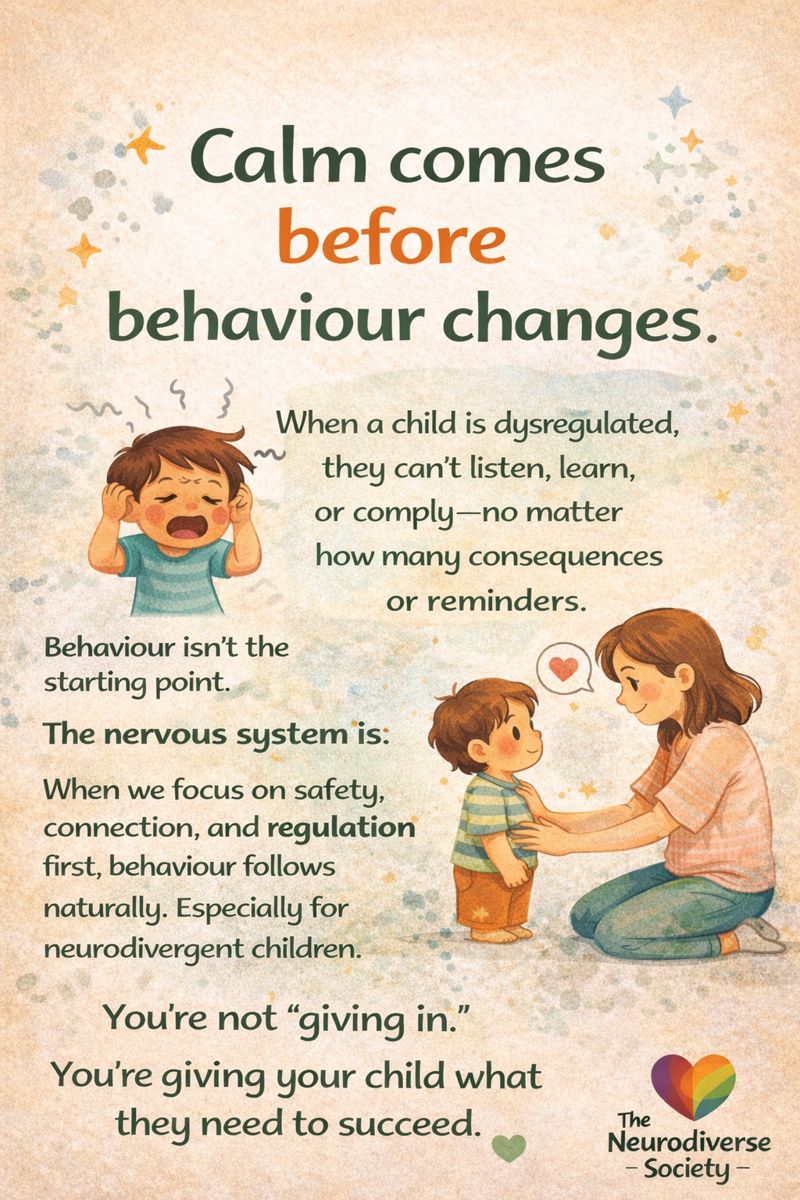
The truth is, behaviour doesn’t change first—calm does.
For neurodivergent children especially, behaviour is not a choice made in isolation. It is the outcome of what’s happening inside the nervous system. Until a child feels regulated, safe, and supported, expecting behaviour change is unrealistic.
Let’s break down why calm must come first—and what that means in real life.
Behaviour Is Not the Starting Point
When a child is dysregulated, their brain is not in a place where learning, listening, or problem-solving can happen.
In those moments, the nervous system is focused on survival, not cooperation.
This can look like:
Meltdowns
Refusal or shutdown
Yelling or hitting
Running away
Crying or collapsing
These behaviours aren’t “bad choices.” They are signals that the child is overwhelmed.
Trying to correct behaviour without addressing regulation is like asking someone to think clearly while they’re panicking—it simply doesn’t work.
Why This Is Especially Important for Neurodivergent Children
Neurodivergent children often experience the world as more intense.
Sounds are louder. Transitions are harder. Unexpected changes feel unsafe. Verbal instructions can be overwhelming.
What might seem like a small moment to an adult can be enough to overload a child’s nervous system.
When this happens, the brain shifts into fight, flight, or freeze. In that state:
Logic shuts down
Language access decreases
Emotional control disappears
No amount of consequences, reminders, or “calm down” requests can override a dysregulated nervous system.
Consequences Don’t Create Calm
Traditional parenting advice often focuses on consequences as the solution to behaviour.
But consequences assume a child:
Has access to self-control
Understands expectations in that moment
Is choosing their behaviour
When a child is dysregulated, none of those things are true.
Consequences may stop a behaviour temporarily, but they don’t teach:
Emotional regulation
Coping skills
Communication
Self-awareness
In many cases, they actually increase fear, shame, and anxiety—making future behaviour challenges more likely.
Calm Is Built Through Safety and Support
Calm doesn’t come from control. Calm comes from safety.
When children feel safe, their nervous system can settle. When their nervous system settles, behaviour naturally improves.
Supportive strategies that help create calm include:
Predictable routines
Visual supports instead of verbal overload
Co-regulation with a trusted adult
Sensory accommodations
Flexible expectations
These strategies aren’t “giving in.” They are meeting the nervous system’s needs.
Regulation Comes Before Learning and Behaviour
A regulated child can:
Listen
Learn
Follow directions
Try again after mistakes
A dysregulated child cannot—no matter how capable they are in other moments.
That’s why focusing on calm first isn’t permissive parenting. It’s effective parenting.
Visual Supports Help Calm the Nervous System
One of the most effective ways to support regulation is through visual aids.
Visual supports:
Reduce verbal demands
Make expectations clear
Increase predictability
Support independence
Lower anxiety
For neurodivergent children, visuals often communicate more clearly than words—especially during stressful moments.
This is why tools like visual schedules, lanyards, and routine boards can dramatically reduce chaos in the home.
Calm Before Behaviour Changes in Real Life
This might look like:
Helping a child regulate before asking them to clean up
Offering sensory input before a transition
Using visuals instead of repeating instructions
Connecting emotionally before correcting behaviour
When calm comes first, behaviour changes are more sustainable—and more compassionate.
You’re Not Doing It Wrong
If behaviour strategies haven’t worked for your family, it doesn’t mean you’re failing.
It means:
Your child’s nervous system needs support
The advice you were given didn’t fit your child
A different approach is needed
And that’s okay.
Moving From Chaos to Calm
Inside our Chaos to Calm Workshop, we focus on exactly this:
Understanding behaviour through regulation
Supporting nervous systems first
Using visuals and routines that actually work
Reducing overwhelm for both children and parents
💚 Chaos to Calm starts February 9 Built for real neurodivergent families and real life.
If mornings in your home feel rushed, emotional, or chaotic, you’re not alone.
For many families raising neurodivergent children, mornings are consistently the most difficult part of the day—and it’s not because children are being lazy, defiant, or unmotivated.
It’s because mornings ask a lot from an already under-supported nervous system.
The Nervous System Is Just Waking Up
After sleep, the nervous system needs time to fully wake up, regulate, and feel safe. For neurodivergent children, this process often takes longer.
In the morning, children are expected to:
Wake up suddenly
Transition quickly
Process instructions
Tolerate sensory input
Meet time-based expectations
That’s a lot to handle before their nervous system is ready.
When regulation hasn’t happened yet, behaviour challenges often follow.
Transitions Are Especially Hard in the Morning
Mornings are full of transitions:
Bed → bathroom
Pyjamas → clothes
Home → school
Calm → busy
Each transition requires mental, emotional, and sensory effort. For neurodivergent children, those transitions can feel abrupt and overwhelming—especially when they’re rushed.
When transitions stack up without support, overwhelm builds quickly.
Time Pressure Increases Stress
Many mornings are shaped by deadlines:
School start times
Work schedules
Appointments
Time pressure can push both children and adults into stress mode. When adults feel rushed, nervous systems mirror each other. This can escalate behaviour even when everyone is trying their best.
It’s not a lack of cooperation—it’s nervous system overload.
Verbal Instructions Often Don’t Stick
In the morning, adults tend to rely heavily on verbal reminders: “Get dressed.” “Brush your teeth.” “We’re leaving soon.”
For neurodivergent children, verbal information can disappear quickly—especially when they’re still waking up or feeling overwhelmed.
This isn’t selective listening. It’s processing overload.
Why Mornings Feel Like a Constant Battle
When regulation hasn’t happened yet, children may:
Refuse tasks
Melt down
Shut down
Move slowly
Seem oppositional
But what’s really happening is this: The brain is prioritizing safety over compliance.
Behaviour improves when the nervous system feels supported—not when pressure increases.
What Helps Make Mornings Easier
Mornings don’t need to be perfect to be calmer. Small, supportive changes can make a big difference.
Helpful supports include:
Predictable routines (kept consistent, not rigid)
Visual schedules instead of repeated verbal reminders
Extra transition time when possible
Regulation before expectations
Simplifying choices and steps
These supports reduce cognitive load and help children feel more secure as their day begins.
Visual Supports Are Especially Powerful in the Morning
Visuals help by:
Showing what comes next
Reducing the need to remember instructions
Creating predictability
Supporting independence without pressure
When children can see what’s expected, mornings become less about conflict and more about guidance.
You’re Not Doing It Wrong
If mornings are hard in your home, it doesn’t mean you’re failing.
It means:
Your child’s nervous system needs more time and support
The morning environment may be overwhelming
Expectations might not yet match regulation
And that’s something that can be supported—not judged.
Calm First, Then Behaviour
When we focus on helping children feel regulated first, behaviour naturally becomes easier.
Calm doesn’t come from rushing harder or enforcing stricter rules. Calm comes from support, predictability, and understanding.
Support for Real Life Mornings
We offer free visual resources designed to help families create calmer, more supportive mornings without overwhelm.
And for families who want deeper guidance, our Chaos to Calm Workshop focuses on:
Regulation-first routines
Visual supports that actually work
Reducing daily stress for parents and children
Creating calm that fits real life
💚 Chaos to Calm is about progress, not perfection.
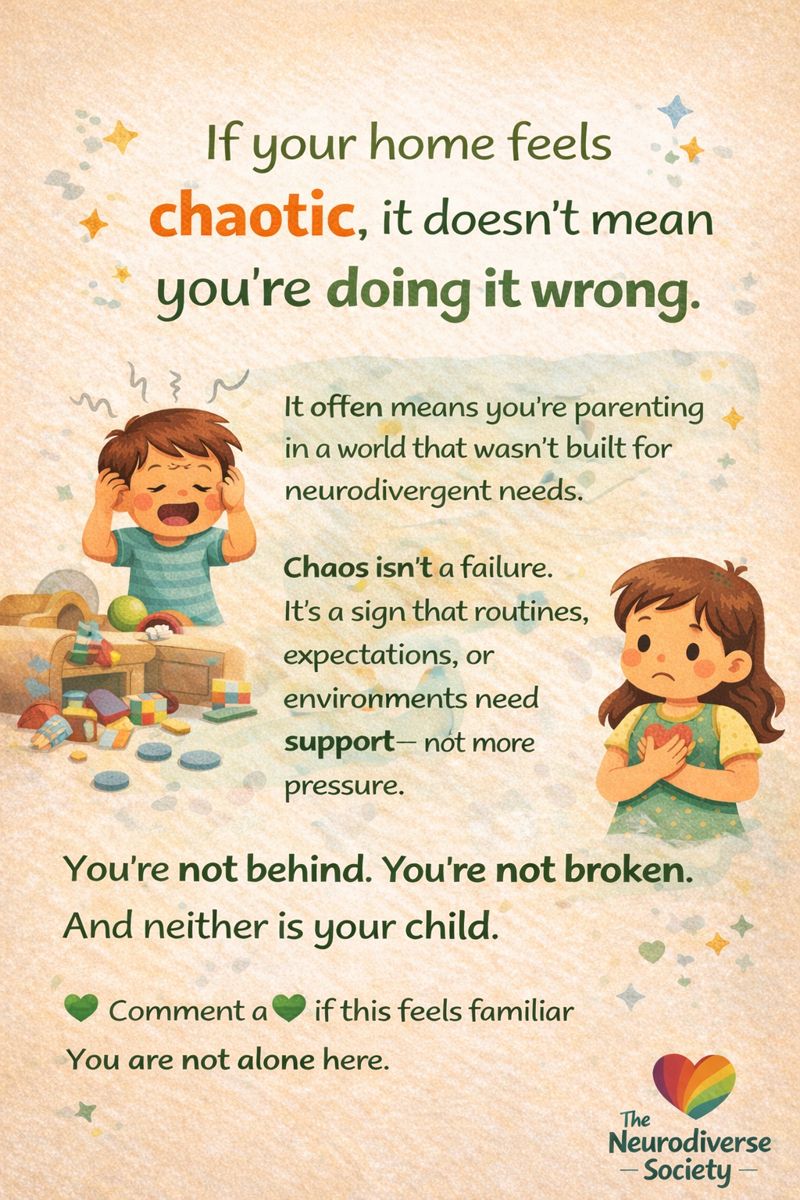
If your home feels chaotic, loud, unpredictable, or overwhelming, it doesn’t mean you’re doing something wrong.
For many families—especially those raising neurodivergent children—chaos isn’t a parenting failure. It’s a signal.
A signal that expectations don’t match needs. A signal that nervous systems are overloaded. A signal that support is missing—not effort.
Let’s talk about why chaos happens, why it shows up more often in neurodivergent homes, and what actually helps.
Chaos Isn’t Bad Behaviour — It’s Communication
When a child is melting down, refusing, yelling, or shutting down, they aren’t choosing chaos.
They’re telling us something they can’t yet explain with words.
In neurodivergent children, behaviour is often the result of:
Sensory overload
Difficulty with transitions
Unclear expectations
Emotional dysregulation
Communication challenges
When the nervous system is overwhelmed, logic, reasoning, and “good behaviour” are not accessible.
Chaos is the body saying: “This is too much.”
Why Chaos Shows Up More in Neurodivergent Homes
Neurodivergent brains process the world differently. Sounds feel louder. Transitions feel harder. Unexpected changes feel threatening instead of neutral.
What looks like a “normal” day to others can feel like a constant state of alert for a neurodivergent child.
Common triggers include:
Rushed mornings
Changes in routine
Too many verbal instructions
Sensory-heavy environments
High expectations without enough support
When these pile up, chaos becomes inevitable—not because of poor parenting, but because the environment isn’t regulated.
Routines Fail When They’re Rigid, Not Supportive
Many parents are told, “Just be consistent.” But consistency without flexibility doesn’t create calm—it creates pressure.
Rigid routines don’t work for neurodivergent children because:
Energy levels change daily
Sensory tolerance fluctuates
Development isn’t linear
When routines don’t allow for regulation, they fall apart—and parents blame themselves.
What actually helps is predictability with flexibility.
The Missing Piece: Regulation Before Behaviour
A child who isn’t regulated cannot:
Follow instructions
Transition smoothly
Use coping strategies
Communicate effectively
Expecting behaviour without regulation is like asking someone to run on a broken leg.
Calm doesn’t come from consequences. Calm comes from safety, understanding, and support.
Why Visual Supports Matter So Much
Visual aids help bridge the gap between expectation and understanding.
They:
Reduce verbal overload
Make routines predictable
Support independence
Lower anxiety around transitions
For neurodivergent children, visuals often work better than words—especially during stress.
That’s why visual schedules, lanyards, and routine boards are so effective in chaotic homes.
Chaos Doesn’t Mean You’re Failing
If your home feels chaotic:
You are not behind
You are not broken
Your child is not “too much”
You are parenting in a world that wasn’t built for neurodivergent needs—and that takes strength.
With the right tools, understanding, and support, chaos can soften into calm.
Ready to Move From Chaos to Calm?
You don’t have to figure this out alone.
Inside our Chaos to Calm Workshop, we break this down step by step:
Why chaos shows up
How to support regulation
How to build routines that actually work
How to use visuals and tools without overwhelm
💚 Chaos to Calm starts February 9 Designed for real families, real life, and real neurodivergent needs.
Social stories are short, simple, and personalized narratives that help children understand specific social situations, behaviors, or concepts. Originally developed by Carol Gray in the early 1990s, social stories are often used as a teaching tool to help children, particularly those with autism spectrum disorder (ASD), navigate the complexities of social interactions. However, their benefits extend to any child who might need support in understanding and managing social experiences.
What Are Social Stories?
A social story describes a specific scenario, explaining the who, what, when, where, and why of the situation in a way that is clear and easy to grasp. The story is typically written from the child’s perspective and includes:
• Descriptive sentences: Provide factual information about the situation.
• Directive sentences: Offer guidance on how to respond or behave appropriately.
• Perspective sentences: Help the child understand the feelings and thoughts of others.
• Affirmative sentences: Reinforce positive behaviors or outcomes.
For example, a social story about visiting a dentist might include:
• “When I visit the dentist, I sit in a special chair.”
• “The dentist will check my teeth to make sure they are healthy.”
• “If I feel nervous, I can hold my parent’s hand. That’s okay!”
• “It’s important to stay calm during the visit, and I will feel proud of myself afterward.”
How Are Social Stories Useful for Children?
1. Improving Social Skills: Social stories provide clear guidance on how to act in different situations, such as making friends, sharing toys, or taking turns.
2. Reducing Anxiety: New or challenging situations can be overwhelming for children. Social stories prepare them for what to expect, helping to reduce fear and build confidence.
3. Teaching Perspective-Taking: By describing how others may feel or think, social stories encourage empathy and help children understand different viewpoints.
4. Encouraging Positive Behavior: Social stories model desired behaviors in a non-judgmental way, helping children understand the benefits of acting appropriately.
5. Supporting Transitions: Changes in routine, such as starting school or moving to a new house, can be stressful. Social stories provide reassurance and a sense of predictability during transitions.
6. Promoting Independence: Social stories equip children with the tools to navigate situations on their own, fostering independence and self-confidence.
Who Can Benefit from Social Stories?
While social stories are commonly used for children with ASD, they can benefit any child who needs extra support in understanding social situations. This includes children with anxiety, ADHD, or learning difficulties, as well as younger children who are still developing their social and emotional skills.
How to Create a Social Story
1. Identify the Situation: Choose a specific situation or challenge your child is facing.
2. Use Simple Language: Write the story using clear, age-appropriate language.
3. Focus on Positivity: Emphasize what the child can do and the positive outcomes.
4. Include Visuals: Use pictures, drawings, or symbols to make the story engaging and easier to understand.
5. Personalize the Story: Tailor it to your child’s unique needs, preferences, and experiences.
Conclusion
Social stories are a powerful tool to support children’s social and emotional development. By breaking down complex situations into manageable and relatable narratives, they provide children with the knowledge and confidence to navigate the world around them. Whether it’s preparing for a big event or learning everyday social skills, social stories can make a lasting difference in a child’s life.
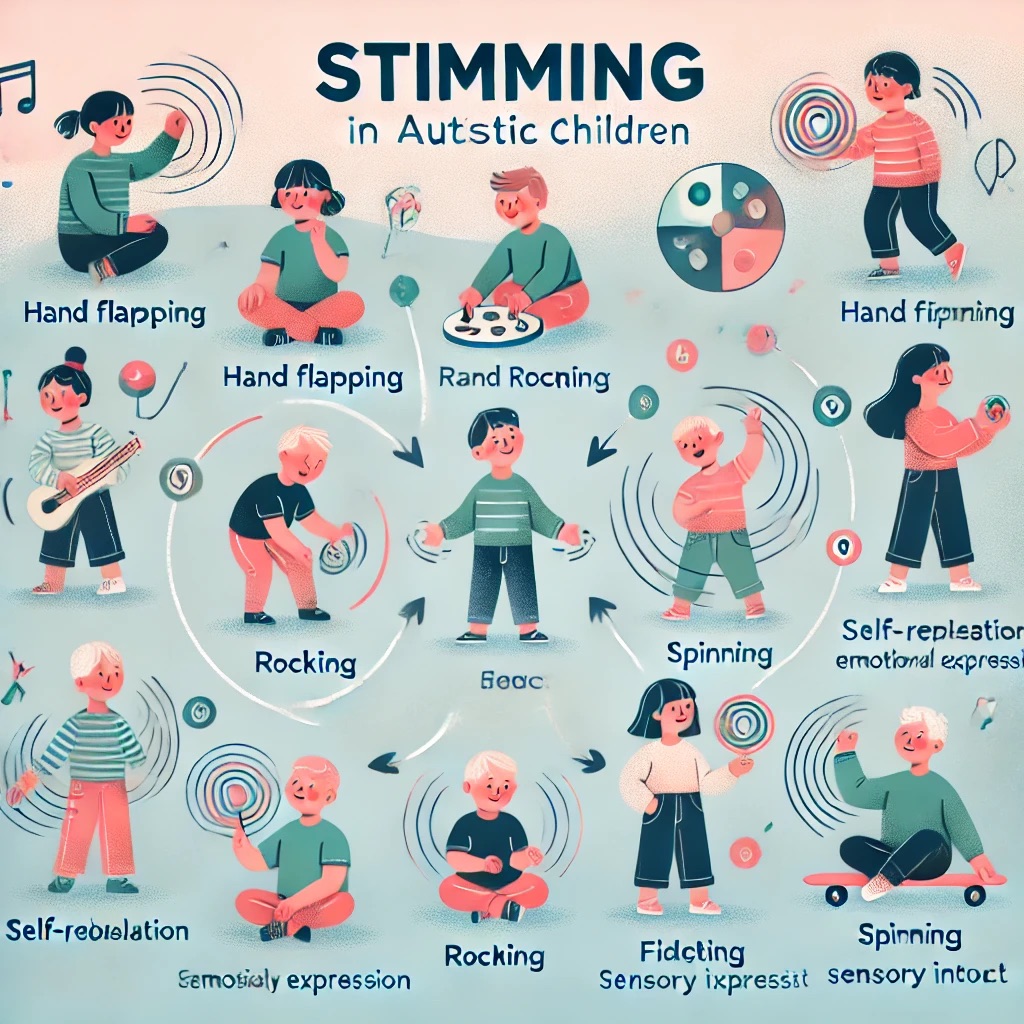
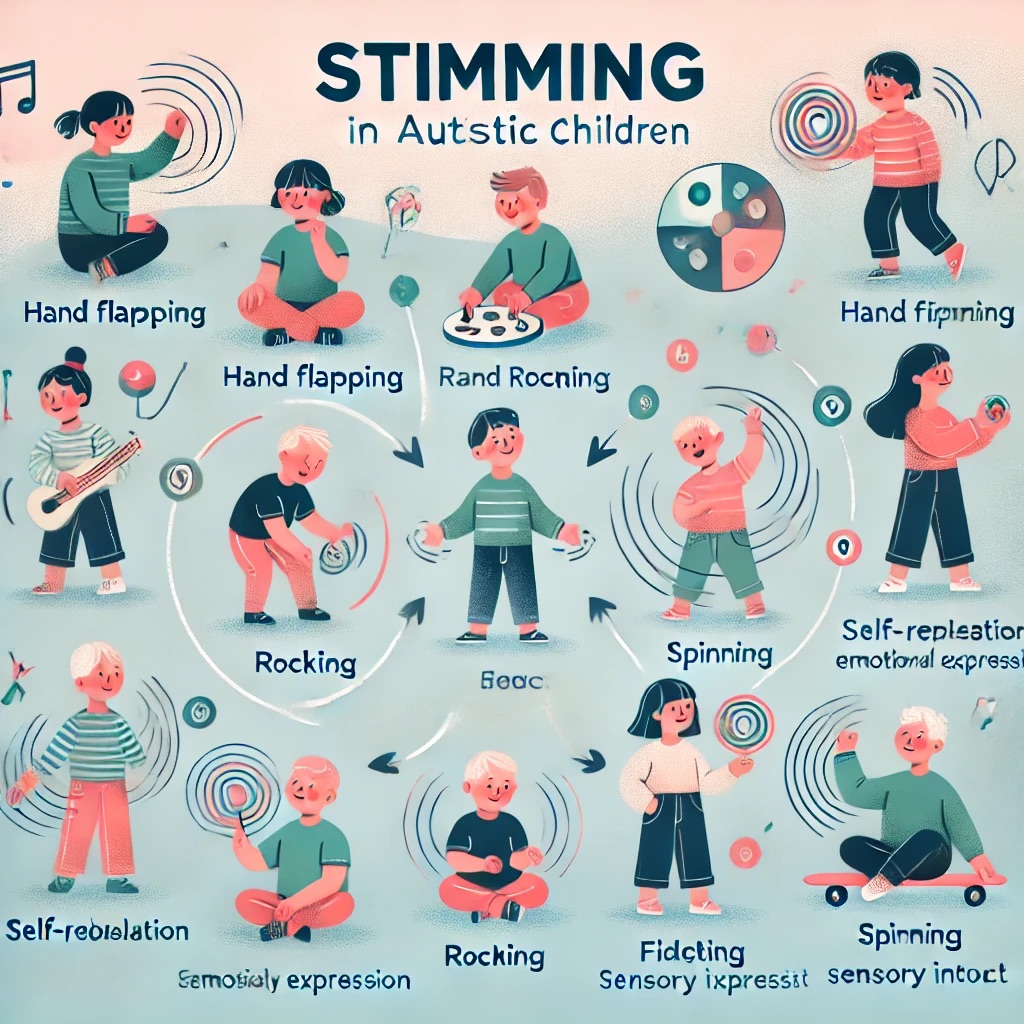
Stimming, short for self-stimulatory behavior, is a term used to describe repetitive movements, sounds, or actions that people use to regulate their sensory experiences and emotions. While everyone engages in some form of stimming—think of tapping your foot, twirling your hair, or humming a tune—it is particularly common and significant in the lives of autistic individuals.
For autistic children, stimming serves as a natural and essential tool to navigate the world around them. In this blog post, we’ll explore what stimming is, its purposes, and why it’s vital to approach this behavior with understanding and support.
What Is Stimming?
Stimming can take many forms, including:
• Physical movements: Hand flapping, rocking, spinning, or finger flicking.
• Vocalizations: Repeating words or phrases, humming, or making sounds.
• Interactions with objects: Spinning toys, lining up items, or flicking light switches.
The key feature of stimming is that it’s repetitive and often rhythmic. While it may appear unusual to others, it’s an entirely natural part of life for many autistic individuals.
Why Do Autistic Children Stim?
Stimming serves several purposes, which can vary depending on the child and the context. Below are some common reasons why autistic children engage in stimming:
1. Regulating Sensory Input
The world can be an overwhelming place, filled with bright lights, loud noises, and unexpected sensations. Stimming helps autistic children manage sensory input, either by calming an overstimulated system or providing extra sensory stimulation when needed.
For example:
• A child might hum or rock to drown out overwhelming background noise.
• Spinning or flicking objects might help focus attention in a chaotic environment.
2. Emotional Regulation
Stimming often serves as a way to cope with strong emotions, whether it’s excitement, anxiety, frustration, or joy. It can act as a self-soothing mechanism during times of stress or as a way to express happiness and enthusiasm.
3. Communicating Needs
Some autistic children, particularly those who are non-speaking or have limited verbal communication, may use stimming to signal their needs or emotions. Observing the type and intensity of stimming can provide valuable insights into what the child is experiencing.
4. Enjoyment and Exploration
Stimming can be fun! Repetitive movements or sounds might bring a sense of comfort, satisfaction, or fascination. For example, some children may enjoy watching light reflections or feeling the texture of certain materials.
Should Stimming Be Stopped?
In most cases, the answer is no. Stimming is a vital and healthy way for autistic children to process their world. Attempting to stop or suppress stimming can increase stress and anxiety, potentially leading to more distressing behaviors.
However, there are situations where stimming may need to be addressed:
• If it poses a safety risk (e.g., head-banging or biting).
• If it interferes with essential activities (e.g., preventing the child from eating or sleeping).
In these cases, it’s important to approach the behavior with compassion. Work with the child to identify underlying triggers and provide alternative, safer ways to meet their needs.
How to Support an Autistic Child Who Stims
1. Observe and Learn
Pay attention to when and why the child is stimming. Is it linked to sensory overload, emotional states, or a need for stimulation? Understanding the triggers can help you provide better support.
2. Create a Sensory-Friendly Environment
Minimize overwhelming sensory input or provide tools like noise-canceling headphones, weighted blankets, or sensory toys that can help the child self-regulate.
3. Celebrate Neurodiversity
Recognize that stimming is a natural part of who the child is. Rather than focusing on “fixing” the behavior, celebrate the unique ways they experience and interact with the world.
4. Seek Professional Guidance
If stimming becomes harmful or significantly interferes with daily life, consider consulting with an occupational therapist or other professionals experienced in autism to develop supportive strategies.
Conclusion
Stimming is not something to fear or suppress; it’s a powerful tool that helps autistic children connect with their world, manage their emotions, and find comfort. By understanding and respecting stimming, we can create a more inclusive and supportive environment where autistic individuals feel safe to be themselves.
Let’s embrace stimming as a reminder that there’s no single “right” way to experience or express life—and that diversity is something to be celebrated.
Sensory bins are a fun, versatile, and educational tool that engage children in hands-on exploration through touch, sight, sound, and even smell. They are simple to create and provide countless opportunities for play and learning, especially for young children or those with sensory needs.
Whether you’re a parent, teacher, or caregiver, sensory bins can become a go-to activity that sparks creativity, calms overwhelmed minds, and promotes development. Let’s dive into what sensory bins are, why they’re beneficial, and how you can make your own!
What Are Sensory Bins?
A sensory bin is essentially a container filled with materials and objects designed to stimulate a child’s senses. It could include a variety of textures, colors, shapes, and even scents. These bins encourage children to explore, sort, scoop, pour, and manipulate materials, all while fostering curiosity and creativity.
While they’re often used for sensory play, sensory bins can also target fine motor skills, problem-solving, language development, and even themed learning.
Why Are Sensory Bins Beneficial?
1. Promote Sensory Exploration: Children use their senses to discover and learn about the world. Sensory bins provide a safe, controlled way to explore textures, sounds, and smells.
2. Develop Fine Motor Skills: Scooping, pinching, pouring, and manipulating small items improve hand-eye coordination and dexterity.
3. Encourage Focus and Calm: Playing with sensory bins can be soothing, helping children who feel overstimulated or anxious.
4. Foster Creativity and Imagination: Children can use sensory bins to create their own stories and games.
5. Support Themed Learning: Sensory bins can be customized to align with educational topics, such as animals, seasons, or letters.
How to Make a Sensory Bin
Creating a sensory bin is simple, budget-friendly, and highly customizable. Here’s a step-by-step guide:
1. Choose a Container
Select a shallow plastic bin or storage container with enough space for your child to explore comfortably. Look for one with a lid if you plan to store it for future use.
2. Select a Base Material
The base material sets the foundation for the sensory bin. Popular options include:
• Wet Materials: Water, water beads, or slime (ensure these materials are safe and supervised).
• Natural Materials: Dirt, small pebbles, leaves, or dried flowers.
Ensure the base is age-appropriate to avoid choking hazards.
3. Add Theme-Related Items
Decide on a theme to make the bin more engaging. For example:
• Beach Theme: Add shells, small toy fish, and a small shovel.
• Alphabet Theme: Use foam letters, letter beads, or flashcards.
• Farm Theme: Include toy animals, corn kernels, and miniature fences.
4. Include Tools and Accessories
Add items that encourage exploration, such as:
• Scoops, spoons, or measuring cups.
• Tongs, tweezers, or small grabbers.
• Small bowls or containers for sorting and pouring.
5. Enhance with Sensory Extras
If you want to engage multiple senses, consider adding:
• Colors: Dye rice or pasta with food coloring.
• Smells: Add cinnamon sticks, essential oils, or dried lavender.
• Sounds: Use items that rattle, crinkle, or make noise when handled.
6. Set Up a Play Space
Place the sensory bin on a washable surface or a plastic mat to contain any mess. Have your child sit comfortably, and let the exploration begin!
Tips for Sensory Bin Success
1. Supervise Young Children: Always supervise children to ensure they play safely, especially if small objects or edible materials are involved.
2. Encourage Open-Ended Play: Let the child lead. Avoid strict instructions and allow them to explore and interact in their own way.
3. Rotate Themes: Keep things fresh by changing the sensory bin’s theme or materials every few weeks.
4. Clean and Store Properly: Dry materials like rice and beans can be stored in airtight containers for future use. Wet materials, like water beads, may need to be discarded after a session.
Easy Sensory Bin Ideas
• Rainbow Rice Bin: Dye rice in different colors and add small toys for sorting.
• Arctic Adventure Bin: Use cotton balls, fake snow, and plastic penguins or polar bears.
• Treasure Hunt Bin: Fill with sand and hide small gems, coins, or figurines. Provide tools to “dig” for treasure.
• Seasonal Bins: Incorporate holiday or seasonal elements, like plastic eggs for Easter, fall leaves, or ornaments for winter.
Final Thoughts
Sensory bins are more than just a fun activity—they’re a tool for exploration, learning, and development. Best of all, they’re easy to create and adapt to your child’s age, interests, or needs. By providing your child with sensory experiences through these bins, you’re nurturing their curiosity and giving them a playful way to engage with the world around them.
Ready to get started? Grab a bin, pick a theme, and watch the magic of sensory play unfold!
For many neurodivergent children, the world is experienced in vivid, intense, and sometimes overwhelming ways. Bright lights, loud noises, strong smells, or crowded spaces can quickly escalate into what is known as sensory overload—a state where the brain becomes overwhelmed by too much sensory information at once.
This phenomenon is common among children with autism spectrum disorder (ASD), ADHD, sensory processing disorder (SPD), and other neurodivergent conditions. To truly support these children, it’s essential to understand what sensory overload is, how it manifests, and how caregivers and educators can help.
What Is Sensory Overload?
Sensory overload occurs when the brain struggles to filter, prioritize, or process sensory input. For neurodivergent children, sensory stimuli—such as sights, sounds, textures, smells, or even emotions—can feel much more intense than they might to a neurotypical individual.
Instead of being able to focus on one input and ignore others, these children might experience everything at full volume simultaneously. For example, a child in a noisy classroom might find the sound of a ticking clock, the buzz of fluorescent lights, and the chatter of classmates equally loud and distracting.
Signs of Sensory Overload
Sensory overload doesn’t look the same in every child, but some common signs include:
1. Physical Reactions: Covering ears, shielding eyes, or retreating to a quieter space.
2. Emotional Responses: Meltdowns, crying, or expressions of fear, frustration, or anger.
3. Avoidance Behaviors: Refusing to enter certain environments, avoiding specific textures, or rejecting certain foods.
4. Hyperactivity or Shut Down: Some children may become frantic and restless, while others may freeze or stop interacting altogether.
5. Self-Stimulatory Behaviors: Repetitive actions like rocking, hand-flapping, or humming, which can help self-regulate and block out overwhelming stimuli.
Common Triggers of Sensory Overload
While triggers vary from child to child, some frequent causes include:
• Auditory Sensitivity: Loud or sudden noises, overlapping sounds, or constant background chatter.
• Visual Overstimulation: Bright or flickering lights, cluttered spaces, or fast-moving objects.
• Tactile Discomfort: Uncomfortable clothing, unexpected touches, or certain textures.
• Crowded Environments: Places with lots of people, such as malls, playgrounds, or classrooms.
• Strong Smells or Tastes: Intense odors, spicy foods, or even unfamiliar scents.
Why Sensory Overload Happens in Neurodivergent Children
In neurodivergent children, sensory processing can work differently, making their brains highly sensitive to external stimuli. This heightened sensitivity isn’t a flaw—it’s a natural variation in how their sensory systems function. However, it can create challenges in environments not designed with their needs in mind.
The inability to filter or prioritize sensory input can lead to sensory overwhelm. Imagine trying to have a conversation while multiple people talk loudly in your ear, bright lights flash, and a fire alarm blares. This is what sensory overload can feel like for a neurodivergent child.
How to Help a Child Experiencing Sensory Overload
If a child is overwhelmed, there are ways to provide immediate support and long-term strategies to help them cope:
Immediate Support
1. Remove the Trigger: Identify and minimize or eliminate the source of overstimulation.
2. Create a Calm Space: Offer a quiet, dimly lit area where the child can decompress.
3. Use Comfort Tools: Noise-canceling headphones, weighted blankets, or fidget toys can help soothe their senses.
4. Validate Their Feelings: Let the child know it’s okay to feel overwhelmed and that you’re there to help.
Long-Term Strategies
1. Sensory-Friendly Environments: Reduce unnecessary noise, provide low lighting options, and maintain a clutter-free space.
2. Structured Routines: Predictable schedules can reduce anxiety and help children prepare for sensory challenges.
3. Teach Self-Regulation Skills: Introduce calming techniques like deep breathing, mindfulness, or sensory breaks.
4. Collaborate with Experts: Work with occupational therapists or other professionals to develop personalized sensory strategies.
Celebrating Sensory Differences
It’s important to remember that while sensory overload can be challenging, the heightened sensory experiences of neurodivergent children are also a source of strength and creativity. These children often notice details others miss, experience the world in vibrant ways, and bring unique perspectives to every situation.
By fostering understanding, creating supportive environments, and celebrating their differences, we can help neurodivergent children navigate the sensory world with confidence and joy.
Final Thoughts
Sensory overload is not a behavioral problem—it’s a neurological response to an overstimulating environment. With empathy, patience, and the right tools, caregivers and educators can make a meaningful difference in the lives of neurodivergent children, helping them feel safe, supported, and empowered to thrive.







 The Neurodiverse Society